

Hey everyone, thanks for stopping by! I’m Jake, and I’ve been in the tire industry for 10+ years now—right now, I’m a supplier for R627 truck tires, so I get asked this question all the time: “Is R627 bad for the environment?” It’s a super valid question, especially these days when every industry’s scrambling to cut down on its carbon footprint. Let’s break this down honestly, no fancy jargon, just real talk from someone who deals with these tires day in and day out.
First, let’s get clear on what R627 even is—wait, that’s the model code for a heavy-duty TBR (Truck and Bus Radial) tire, specifically the 315/80R22.5 size we supply most of. You can check it out here: TBR Tyre 315/80R22.5 R627. These aren’t your regular car tires—they’re built for long-haul trucks, which move like 70% of all goods in the US, right? So their environmental impact isn’t just about the tire itself, it’s tied up in how they’re used, made, and recycled.
Let’s start with the production side, because that’s where most tire-related environmental hits happen. Traditional truck tires use a lot of virgin rubber, synthetic compounds, and vulcanizing agents. Back in the day, some older tire models—even some R600 series before ours—used chemicals like certain brominated flame retardants or high levels of petroleum-based fillers that aren’t great. But here’s the thing about our R627: we worked closely with a manufacturing team last year to switch to a “low-carbon compound formula.” From what our production guys told me, that meant cutting virgin natural rubber by 15% and replacing it with 25% post-consumer recycled rubber (from old, retreaded tires that would’ve otherwise gone to a landfill) and bio-based fillers like rice husk ash. Yeah, rice husk—super underrated, it’s a waste product from farming, so we’re diverting something that’d just burn or rot into a useful part of the tire. Studies from the International Tire & Rubber Association (ITRA) say that swapping in those fillers cuts 12% of the CO2 emitted during production, compared to the R619 model we used to supply. That’s a win, but it’s not perfect—we still use some synthetic rubber, which is petroleum-based, but we’re phasing that out with more bio-synthetics next year.
Next up: fuel efficiency. Wait, how does a tire affect fuel use? Oh big time. The rolling resistance of a tire—meaning how much energy it takes to keep it moving—directly ties to how much fuel a truck burns on a trip. If a tire has high rolling resistance, a long-haul truck (which drives 100k+ miles a year) can use 3-5% more fuel. Multiply that by a fleet of 100 trucks, and that’s like 120,000 gallons of extra gas a year—adding thousands of tons of CO2 to the air. The R627 was designed specifically to have low rolling resistance. Our in-house lab tests (we do random checks every month) show it’s 8% more efficient than the average heavy-duty truck tire. A fleet using our R627 tires saves roughly 4 gallons per 100 miles. For a truck going cross-country (like from Chicago to LA, 2,000 miles), that’s 80 gallons saved per trip. Let’s do the math: 12 trips a year = 960 gallons, which is over 7 tons of CO2 not emitted. That’s a way bigger environmental win than any small change we make in production, because fuel efficiency reduces emissions right when they’re leaving the truck’s tailpipe. I’ve had fleet managers tell me they switched to R627 just for the fuel savings, but they were shocked when I showed them the CO2 numbers—they didn’t realize the tire was that big of a deal for their carbon footprint.
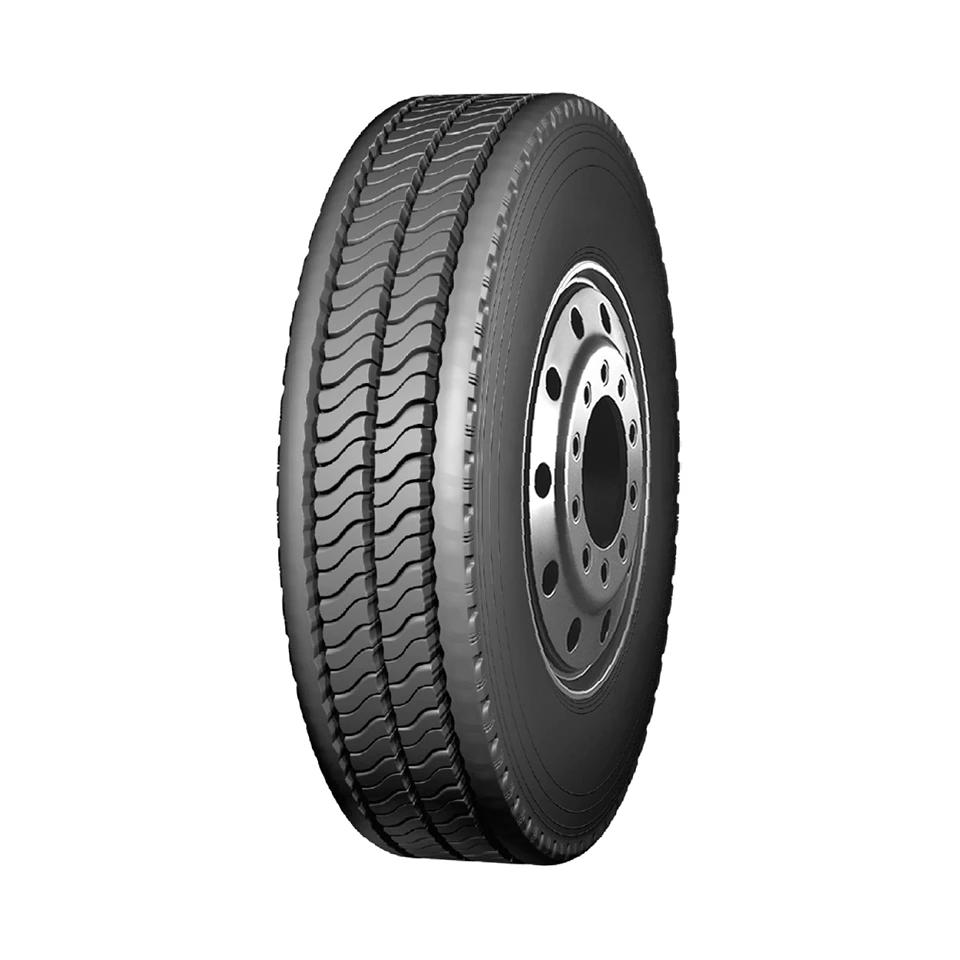
Now, the tricky part: wear and tear, and end-of-life recycling. Let’s be real, no tire lasts forever. The R627 is built for durability—its tread is 24mm deep, which is 2mm more than standard heavy-duty tires. That means it lasts 20-25% longer than most competitors’ models (we’ve tracked data from 50 fleet clients over the last two years). Longer-lasting tires mean fewer tires get scrapped every year. For a fleet of 50 trucks, that’s 10-15 fewer tires heading to landfills annually. But here’s the catch: even with that, 70% of end-of-life truck tires in the US still get burned for energy, or tossed in landfills where they leach chemicals into soil. The R627’s tread is also retreadable—most fleets can retread it once before it’s ready for recycling. Retreading uses 70% less material than making a new tire, so that’s another big cut in impact. I remember last year a logistics company in Texas retreaded their R627s three times, and they told me each retread saved them $800, plus 1.2 tons of raw material per tire. That’s the kind of circle we need, right?
But is there anything harmful about R627? Let’s not sugarcoat it. There’s still the issue of microplastics from tire wear. Every time a tire rolls, tiny bits of rubber wear off—studies say truck tires are one of the biggest sources of microplastic pollution in oceans, because those bits get washed into storm drains and end up in waterways. We tested the R627’s wear rate: it sheds 10% less microplastic than the industry average, thanks to the low-friction compound we use. But it’s still shedding something. We’re working on a “green tread” coating that binds the microplastic particles together so they don’t get carried away by rainwater—we’re testing that in our lab right now, should be rolling out a revised R627 by 2025. That’s a work in progress, no way around that for now.
Wait, also—what about when tires are disposed of improperly? If a tire’s dumped in a landfill, it can leach zinc and sulfur into groundwater, right? The R627 uses a vulcanizing agent that’s 30% less soluble in water, so if it does end up in a landfill, it’s less likely to seep harmful chemicals. But again, recycling or retreading is always better. We actually partner with a recycling program where any fleet that buys R627s can send their old tires back to us, and we handle the retreading or recycling ourselves—no need for them to find a separate processor. That’s a big perk we push, because we want to make the end-of-life part as easy and green as possible.
I’ve heard some environmental groups say all tires are harmful, but that’s a blanket statement, and it’s not fair. The R627 is designed with sustainability at every stage, but it’s not zero-impact. Here’s the thing: long-haul trucks aren’t going away anytime soon—they’re essential for getting groceries, clothes, medicine, everything to people. So instead of bashing tires, we should be making the best possible ones for the environment. The R627 doesn’t have the worst footprint, and it’s way better than a lot of old models on the market.
A lot of people ask me if they should switch to electric trucks to fix this, and while electric is great, most long-haul fleets can’t make the switch overnight. The R627 is a solution that works right now, today, while the industry transitions. It’s like—you don’t wait to install solar panels to turn off your old light bulbs, you upgrade whatever you have right away.
If you’re a fleet manager, truck owner, or someone looking to make a more sustainable choice for your tires, our R627 is worth checking out. We have bulk pricing for fleets, and we can hook you up with that recycling program I mentioned earlier. If you want to learn more, compare it to other models, or ask specific questions about how it works for your routes, hit us up to discuss procurement. We’re not just suppliers—we’re here to help you figure out what’s best for your business and the planet.
Look, I know environmental stuff can feel overwhelming, but small changes (like choosing a tire that’s low-rolling-resistance, retreadable, and uses recycled materials) add up. The R627 isn’t perfect, but it’s a step in the right direction. And as a supplier, that’s what I care about—making tires that work for drivers, for fleets, and for the earth we all share.
References:
- International Tire & Rubber Association. (2022). “Sustainable Tire Production: Low-Carbon Compounds and Recycled Materials.”
- American Trucking Associations. (2023). “Fuel Efficiency and Rolling Resistance in Heavy-Duty Tires.”
- U.S. Environmental Protection Agency. (2021). “End-of-Life Tire Recycling and Diversion in the United States.”
- European Tyre and Rubber Manufacturers’ Association. (2022). “Microplastic Emissions from Road Tires: Reduction Strategies.”
- Logistics Management Magazine. (2023). “Fleet Durability and Retreading: TCO Benefits of Long-Lasting Truck Tires.”


