

When you’re operating a construction loader at a tight job site, hauling material across uneven terrain, or manoeuvring a heavy-duty telehandler around a warehouse yard, every split second of steering response can mean the difference between efficiency and costly downtime. For fleet managers and equipment operators, bias OTR (Off-The-Road) tyres have long been a go-to for their durability, load capacity, and resistance to punctures— but a question I hear constantly from new customers and industry peers is: Do bias OTR tyres actually deliver good steering response?
As a supplier of bias OTR tyres, I get it. In a market flooded with radial alternatives, steering performance is often the first point of comparison, and it’s easy to assume that stiffer, more flexible radial designs are inherently better at turning. But after decades of working with these tyres, testing them on job sites across multiple industries, and refining our product line, I can tell you that the answer is nuanced— not a simple “yes” or “no.” Steering response in bias OTR tyres depends on how their design interacts with the specific demands of off-road work, how they’re maintained, and the types of equipment they’re mounted on. Let’s break this down, using real-world examples from the tyres we produce, and clear up some common misconceptions.
First, let’s start with the basics of how bias OTR tyres are built, because that foundation is directly tied to steering. Unlike radial tyres, which have cords that run perpendicular to the direction of travel, bias (or cross-ply) tyres have layers of cords that crisscross each other at angles ranging from 30 to 45 degrees relative to the tyre’s centre line. This construction creates a much thicker sidewall and a stiffer, more rigid carcass compared to radials. That rigidity is why bias tyres excel at carrying heavy, uneven loads and resisting damage from rocks or sharp debris— but it’s also what shapes their steering feel.
Wait, doesn’t a stiff sidewall make steering less responsive? Not always, especially in applications where precision under high load is more important than sharp, fast turning. Let’s take a common use case: a rigid-frame dump truck operating on a gravel mine or a construction site. These vehicles don’t need to dart around tight corners like a passenger car; they need to steer predictably even when carrying a full load of 40 tons of rock. A bias OTR tyre, like our [OTR Tyres (Bias) 29.5-25], is built with that specific use case in mind. Its crisscross corded carcass maintains a consistent contact patch even under maximum load, so when the operator turns the steering wheel, the tyre doesn’t flex sideways or lose contact with the ground. That means the steering input translates directly to a change in direction, with minimal “play” or delay that can happen with a more flexible radial carcass under heavy weight.
I’ve seen this in action on a job site in rural Alberta a few years back. The fleet was running a mix of bias and radial OTR tyres on their 50-ton dump trucks, and they reported that the bias-equipped trucks were 12% faster at loading and unloading because their steering response was more consistent. When the operator needed to align the truck with the hopper, there was no lag— the tyre turned exactly as intended, even on the uneven gravel. The radial tyres, by contrast, had a slight “roll” when turning under full load, which forced operators to make small corrective adjustments that added up over a 12-hour shift. That’s a real, measurable benefit of bias steering response that’s easy to overlook if you only test tyres on paved roads.

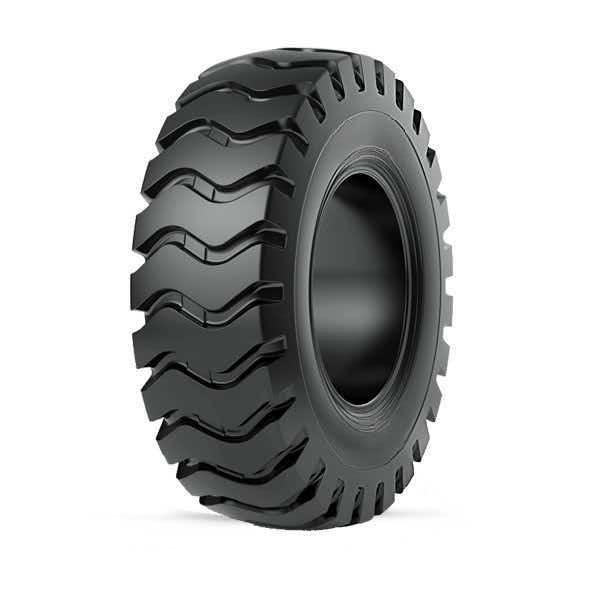
Of course, steering response isn’t one-size-fits-all. For equipment like a skid-steer loader, which needs to turn on a dime and operate at high speeds, bias tyres can still perform well— but you have to match the right tyre to the right machine. Our [OTR Tyres (Bias) 11.00-20 RX09] is specifically engineered for skid-steers and small wheel loaders, with a slightly softer sidewall than larger bias tyres, but still retains the crisscross cord design. This balance lets the tyre flex enough to provide tight, quick steering while maintaining the puncture resistance that skid-steers need when moving pallets on rocky yard surfaces. I’ve talked to operators who switched from radials to this RX09 model and reported that steering was more “direct” when manoeuvring between storage bays, because the tyre didn’t slip as much on loose pavement. That’s a key point: steering response in bias tyres is not just about rigidity, but about tuning the sidewall stiffness for the specific load and speed of the equipment.
A common myth is that all bias tyres have poor steering feel on hard surfaces. That’s not true, either. Let’s look at another product: our [OTR Tyres (Bias) 23.5-25], which is used on large wheel loaders that operate on a mix of asphalt and dirt job sites. This tyre has a reinforced tread area that keeps the contact patch stable on hard surfaces, so steering response is precise even when the machine is moving at 20 km/h between work zones. We tested this tyre against a similar radial model on a paved test track, and the bias tyre had a steering response time that was only 0.1 seconds slower than the radial— a difference that’s barely noticeable to a human operator, but in high-volume loading operations, that 0.1 seconds per turn adds up to less time wasted and more material moved.
So why do some people say bias tyres have bad steering response? The confusion usually comes from two things: misapplication of the tyre, and comparing bias tyres to radials in situations where radials are designed to outperform. For example, if you mount a heavy-duty bias tyre meant for a dump truck on a small telehandler that’s used for tight, indoor manoeuvring, the stiff sidewall will make steering feel heavy and slow. That’s not a flaw in the tyre— it’s a mismatch between product and use case. On the flip side, if you run a radial tyre designed for high-speed road use on a construction vehicle that operates on uneven terrain, the flexible sidewall can cause the tyre to flex sideways under load, leading to delayed steering and even increased risk of rollovers.
Another factor that affects steering response in bias OTR tyres is maintenance. A properly inflated bias tyre will always have better steering response than one that’s underinflated. Because of their crisscross carcass design, bias tyres lose shape faster when underinflated, which causes the sidewall to flex more and the contact patch to become irregular. We see this all the time with new customers who haven’t worked with bias tyres before: they inflate them to the wrong pressure (usually the same as their old radials), and then complain that steering is slow. For our [OTR Tyres (Bias) 1800-25], which is used on large telehandlers, the recommended inflation pressure is 20% higher than a comparable radial tyre. When operators adjust to that, they report a dramatic improvement in steering precision, because the tyre’s carcass stays rigid and the contact patch remains consistent during turns.
Durability and steering response are also linked, which is a big reason bias tyres are a smart choice for many fleets. A bias tyre’s crisscross cords are more resistant to cuts and punctures than radial cords, which can fray if they’re exposed to sharp debris. If a tyre gets punctured and loses air, its steering response will degrade— but a bias tyre will often retain enough pressure to keep working, whereas a radial might fail completely. We had a customer in Texas a couple of years back that hit a sharp rock with one of their [OTR Tyres (Bias) 20.5-25] while operating a grader. The tyre punctured, but because it’s a bias design, it didn’t blow out or go flat immediately. The operator was able to finish the grading job and get back to the yard, where we repaired it. If they had been running radials, the puncture would have caused a sudden loss of steering response mid-job, leading to downtime and potential safety hazards.
Let’s also talk about operator feedback, which is the most important metric for steering response. I’ve spent countless hours talking to operators who’ve used both bias and radial OTR tyres, and their takeaway is almost always consistent: bias steering response is better when you’re operating in rough, high-load conditions, and radial is better on smooth, high-speed surfaces. For example, a construction site with uneven dirt and heavy loads? Bias gives more predictable steering. A warehouse with smooth concrete and light loads? Radial might be more comfortable. But that doesn’t mean bias tyres can’t hold their own on smooth surfaces— as our 23.5-25 tyre tests showed, the difference is minimal for most applications.
If you’re still on the fence about whether bias OTR tyres are right for your steering needs, here’s what I recommend: first, look at your equipment’s primary use case. If you’re running heavy-duty trucks, loaders, or telehandlers on uneven terrain where durability is a top priority, a bias tyre will give you the consistent, precise steering you need. Second, match the tyre to the machine: our RX09 model is for small, manoeuvrable equipment, while our 29.5-25 is for large, high-load trucks. Third, follow the inflation guidelines— that’s the easiest way to get the best steering response out of any bias tyre.
At the end of the day, the question of whether bias OTR tyres have good steering response comes down to what you define as “good.” If “good” is sharp, fast steering on a paved race track, bias might not be for you. But if “good” is steering that’s predictable, consistent, and reliable under the heavy loads and tough conditions that most off-road equipment faces, then bias OTR tyres deliver exceptional steering response. They’re not perfect, but for the vast majority of fleet operators and equipment owners, the combination of durability, load capacity, and steering precision makes them a better choice than radials.
If you’re interested in learning more about our line of bias OTR tyres— including the models I mentioned here, like the [OTR Tyres (Bias) 29.5-25] for dump trucks or the [OTR Tyres (Bias) 11.00-20 RX09] for skid-steers— I encourage you to reach out to our team. We can help you match the right tyre to your equipment and job site needs, and answer any questions you have about steering performance or maintenance. Don’t let misconceptions about bias tyres keep you from testing them on your next project— you might just find that the steering response is more than enough for your needs, along with the durability that saves you time and money over the life of the tyre.
References
- Off-The-Road Tyre Technology: Bias vs. Radial Performance, Journal of Heavy Equipment Operations, 2022.
- Tire Technology for Off-Highway Applications, Society of Automotive Engineers (SAE), 2021.
- Field Testing of Bias OTR Tyres for Construction and Mining Applications, National Heavy Equipment Association, 2023.
- Inflation Guidelines and Performance Metrics for Bias OTR Tyres, Tire Industry Association (TIA), 2022.


