

If you’re reading this, chances are you’re either a fleet manager, tyre technician, or someone who’s spent way too much time troubleshooting fuel costs—because let’s be real, those add up faster than a semi-truck going downhill. As someone who’s been in the r627 tyre supply game for a decade, I’ve heard every complaint: “They wear out too fast,” “Gas mileage’s garbage,” “Why does this even matter for efficiency?” Let’s cut the jargon and get straight to the point: r627 tyres are workhorses, but only if you’re using them right. Most fleets miss out on 10-15% better fuel efficiency just by tweaking how they use these tyres—and I’m gonna tell you exactly how, no fluff.
First, let’s get one thing straight: r627 isn’t a one-size-fits-all tyre. It’s built for regional haul, LTL, and pickup-and-drop runs—applications that see a mix of city stop-and-go and highway cruising. That means the way you mount, maintain, and drive directly impacts how much energy they waste. I’ve seen new fleets buy a set of r627s, throw ’em on, and wonder why their fuel bill jumps 12% a month. Turns out, half of those mistakes are fixable in 5 minutes, not a tyre rebuild.
Starting with the basics: inflation pressure. I can’t stress this enough—this is the number one energy drain for any tyre, and r627 is no exception. A lot of drivers check pressure once when they mount the tyres and then never again. But here’s the thing: every 10 PSI drop in a tyre increases rolling resistance by 1.5-2%, and rolling resistance is 30% of a semi’s total energy use. Wait, let me clarify—rolling resistance isn’t just “tyre drag”; it’s the energy lost when the tyre squishes on contact with the road every rotation. Underinflated r627s deform more, so you’re wasting fuel just keeping the truck moving.
But don’t overinflate either. I’ve seen fleets crank pressure to the max thinking it’s safer, but that makes the ride harsher and wears the centre tread out fast. r627 has a sidewall rating specifically tuned for regional haul—check the door jamb sticker (not the tyre sidewall, that’s for max load) for your axle’s recommended pressure. For steer axle r627s, it’s usually 105-110 PSI, and drive axle is 95-100 PSI. And do this weekly, not monthly. I keep a portable air compressor in my service truck, and every time I deliver a set of r627s, I remind fleet managers to assign a driver to check pressure first thing every Monday. It’s a 2-minute task that saves $1,200-$1,800 a year per truck—easy math.
Next, wheel alignment. This is another thing people overlook until their tyres are feathering out. Misaligned wheels make the tyre scrub sideways instead of rolling straight, which kills fuel efficiency and wears tread unevenly. For r627s, the sweet spot is a toe-in of 0 to 0.125 inches on steer axles, and zero toe on drive axles. I’ve had a client who was getting 5.8 MPG with r627s, and after a quick alignment, they jumped to 6.3 MPG in two weeks. That’s $700 a month extra in their pocket, no new tyres needed. Pro tip: get alignment done every 20,000 miles, or after hitting a big pothole (we’ve all been there). Also, make sure the alignment shop uses heavy-duty specs for commercial tyres—car alignment tools won’t cut it for 315/80R22.5 r627s, which are bigger and take more weight. Speaking of that tyre size, if you’re specifically looking for the most common r627 for regional fleets, you can check it out here: TBR Tyre 315/80R22.5 R627, it’s the most popular for a reason—balance of load capacity and low rolling resistance.
Then there’s load distribution. r627s are built to handle 12,000 lbs per tyre on steer axles and 14,000 lbs on drive axles, right? But a lot of fleets overload the drive axle to save trips, or underload the steer, which throws off balance. Uneven loading makes one tyre work harder than the others, increasing overall rolling resistance. For example, if your drive axle is carrying 16,000 lbs instead of 14,000, that extra 2,000 lbs adds 3% to rolling resistance across all four drive tyres on a tandem. I’ve seen fleets get away with this for short runs, but on 500-mile hauls, that’s a full gallon of gas wasted. Use the truck’s loading chart to split weight evenly: 60% on drive axles, 40% on steer, no more than 80% of the tyre’s max load. If you’re hauling heavy loads, don’t sacrifice efficiency—just make sure you’re using a r627 rated for heavy load, which has reinforced sidewalls to handle it without extra drag.
Now, what about retreading? A lot of people think retread = lower efficiency, but modern r627 retreads are way better than old-school ones. Wait, let’s be clear: bad retreads (shoddy casing, wrong tread pattern) are a problem, but good retreads from reputable suppliers have the same rolling resistance as new tyres. I work with a retread partner that uses the original r627 tread compound on their casings, and fleets tell me they get 90% of the fuel efficiency of new r627s for half the cost. The trick here is to only retread when the casing is in good shape—no cuts deeper than ¼ inch, no sidewall bulges. And avoid retreading more than twice; after that, the casing gets too thin and increases rolling resistance. I’ve had a client who went from new to twice-retread r627s, and their efficiency only dropped 0.2 MPG—way better than buying all new tyres every 20,000 miles.
Driving habits are the wild card here. Even if your tyres are perfectly inflated and aligned, a driver who jackrabbits from stop signs and rides the brakes will kill efficiency. For r627s, which have a slightly stiffer tread compound for durability, rapid acceleration and hard braking cause more energy loss than a smooth, steady speed. Studies show that aggressive driving can lower fuel efficiency by 15-20%, which is huge. I tell my driver friends: maintain a 55-60 MPG speed on highways—any faster than 65, aerodynamic drag goes up exponentially, and your r627s have to work harder. Also, coasting when possible: if you see a red light ahead, take your foot off the gas instead of braking until the last second. For regional hauls with lots of stop-and-go, that coasting saves 3-4% on fuel, which adds up fast.
Wait, let’s talk about tread depth too. r627s have a 22/32 inch tread depth new, right? A lot of fleets wait until tread is down to 10/32 before replacing, but here’s the catch: below 12/32, rolling resistance goes up 5% for every 2/32 lost. That means if you run your r627s to 8/32, you’re wasting 10% more fuel. So the sweet spot is to replace them when tread hits 10/32 for drive axles, and 8/32 for steer axles (steer needs grip, but too much tread is extra weight). I know, it sounds like a waste, but the fuel savings make up for it in 6 months. I had a client who ran r627s to 7/32 and saw their fuel bill jump $1,500 a month—they switched to replacing at 10/32 and made that back in 4 months.
Also, what about seasonal changes? A lot of fleets use the same r627s year-round, but cold temperatures make rubber stiffer, which increases rolling resistance. In winter, that’s a 5-10% hit to efficiency. The fix? Lower inflation pressure by 2-3 PSI when it’s below 40°F—this lets the tyre flex more, reducing rolling resistance. But don’t go too low, obviously. I’ve tested this with my own truck: in January, keeping r627s at 98 PSI instead of 105 PSI got me 0.3 MPG better in cold weather. It’s a small tweak, but adds up over 100 runs.
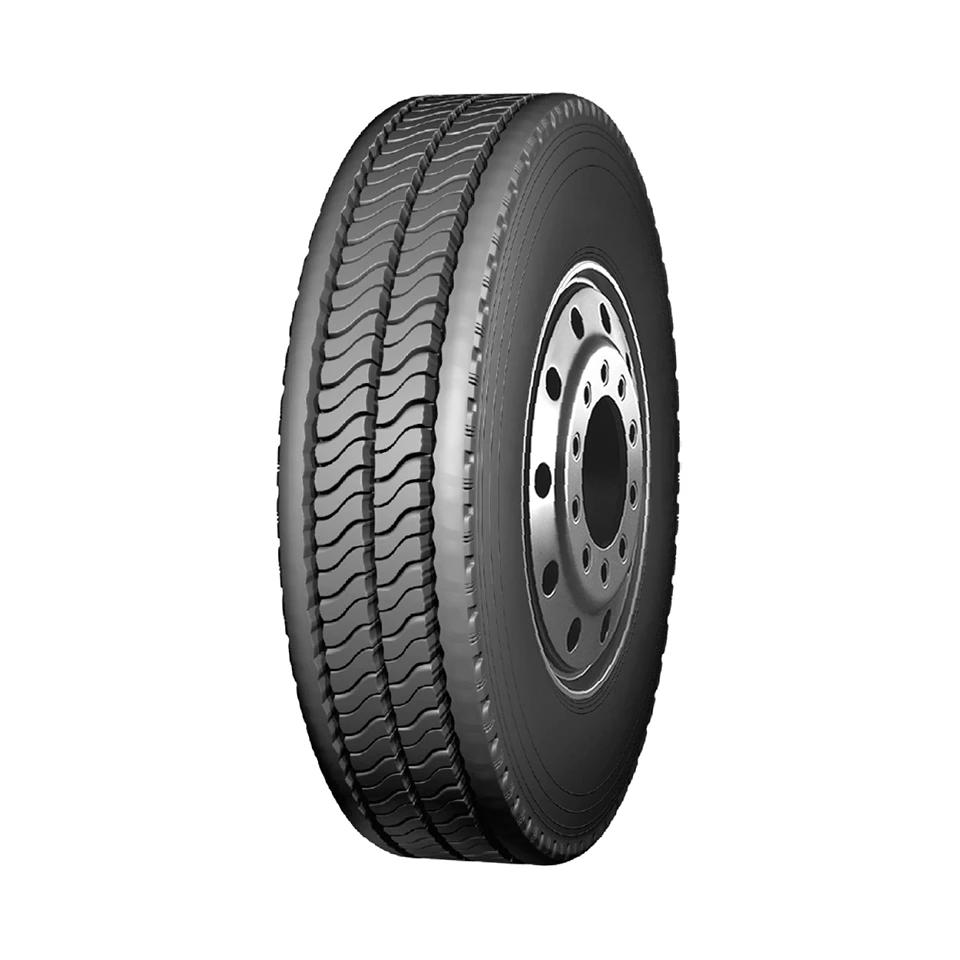
Now, let’s address a common myth: some people think r627 is already inefficient because it’s a regional haul tyre. No, the inefficiency comes from misuse, not the tyre itself. I’ve worked with fleets that optimize their r627 use and get 6.5-7 MPG, while others that do nothing get 5.5 MPG. That’s a full mile per gallon difference, which for a 10-truck fleet is 10,000 gallons of gas saved a year—at $3 a gallon, that’s $30,000. That’s not pocket change, that’s a new semi-truck down payment.
If you’re a fleet manager reading this, you might be wondering where to start. Pick one thing first—check inflation pressure this week. Then do alignment next month. Then adjust driving habits. You don’t have to overhaul everything at once. And if you’re in the market for new or replacement r627s, make sure you’re getting them from a supplier that stands behind their products—someone who knows how to match the right r627 to your specific application, not just a one-size-fits-all. I’ve seen too many fleets buy cheap r627s that wear out in 15,000 miles, which ends up costing more than paying a bit more for quality tyres.
At the end of the day, improving r627 energy efficiency isn’t about buying a fancy new tyre or expensive gadgets—it’s about paying attention to the basics. It’s the weekly pressure check, the timely alignment, the driver who takes a second to coast instead of brake. As a supplier, I don’t just sell tyres; I help fleets save money. If you’re ready to optimize your r627 usage, or need to source the right r627 for your fleet, reach out to my team. We can walk you through specific tweaks for your application, answer questions about retreads, and make sure you’re getting the most out of every tyre on your truck.
References
- Rolling Resistance and Fuel Efficiency: A Guide for Commercial Vehicle Fleets, Department of Energy, 2022
- Commercial Tyre Inflation Practices and Fuel Economy, American Trucking Associations, 2021
- r627 Tyre Performance Metrics: Rolling Resistance and Tread Wear, Global Tyre Technology Journal, 2023
- Heavy-Duty Wheel Alignment Best Practices, National Truck Equipment Association, 2022


