

If you’re shopping around for heavy-duty truck tires, chances are you’ve come across both r627 and r22 thrown around in product specs, shop talk, or online listings. As someone who’s been in the r627 supply game for the past 8 years—helping fleets, owner-operators, and independent tire shops source tires that actually hold up on long hauls and rough routes—I get that mixing up these two (especially since they’re often listed side-by-side on tire spec sheets) is super easy. Let’s break down the real differences, no stuffy jargon, just what actually matters when you’re dropping thousands on new rubber.
First off, the basics: both are heavy-duty radial tires built for on-highway work, right? But that’s about where the similarity ends. Let’s start with size, because that’s the first thing anyone checks when replacing a tire. The r22 here I’m talking about is almost always the 22.5-inch rim diameter standard—super common for North American Class 8 trucks, which are the big 18-wheelers you see hauling freight cross-country. The r627, specifically the one we supply, isn’t just a random offshoot: it’s engineered for that same 22.5-inch rim too, wait no—wait, hold on, no, let’s get that straight. The r627 is a line of TBR (Truck Bus Radial) tires, and our most popular model is the TBR Tyre 315/80R22.5 R627, which is a perfect fit for those 22.5-inch rims. The r22, on the other hand, is a general designation for any tire with a 22.5-inch rim, like there’s r22 drive tires, r22 trailer tires—no model-specific code, just a rim size shorthand that shops use to reference stock they keep around. So if someone says “I need an r22,” they might be grabbing any tire that fits a 22.5-inch rim, not a purpose-built model. That’s a big first red flag if you’re after consistent performance.
Next, tread design. This is where the rubber meets the road, literally. The r627 I supply is a steer axle tire—purpose-built to take the friction of guiding a 36-ton truck down the highway. Its tread is a deep, solid rib pattern with sipes (those tiny slits in the rubber) that flex just enough to grip wet or dry pavement, but not so much that it wears out fast. The tread depth on our 315/80R22.5 R627 is 24/32nds, which is deep enough to last 250k to 300k miles on proper on-highway routes. The r22? Most r22 tires are generic, so their tread patterns vary like crazy—some are too shallow, some have blocky treads that catch on gravel, some are even repurposed light-truck tires that can’t handle the load of a full semi. I’ve seen a guy pull up to our shop with an r22 steer tire that only had 16/32nds tread—he bought it from a local shop because it was $50 cheaper, and it wore down so bad in 80k miles he had to replace it again. Cost-wise, that’s a waste, right?
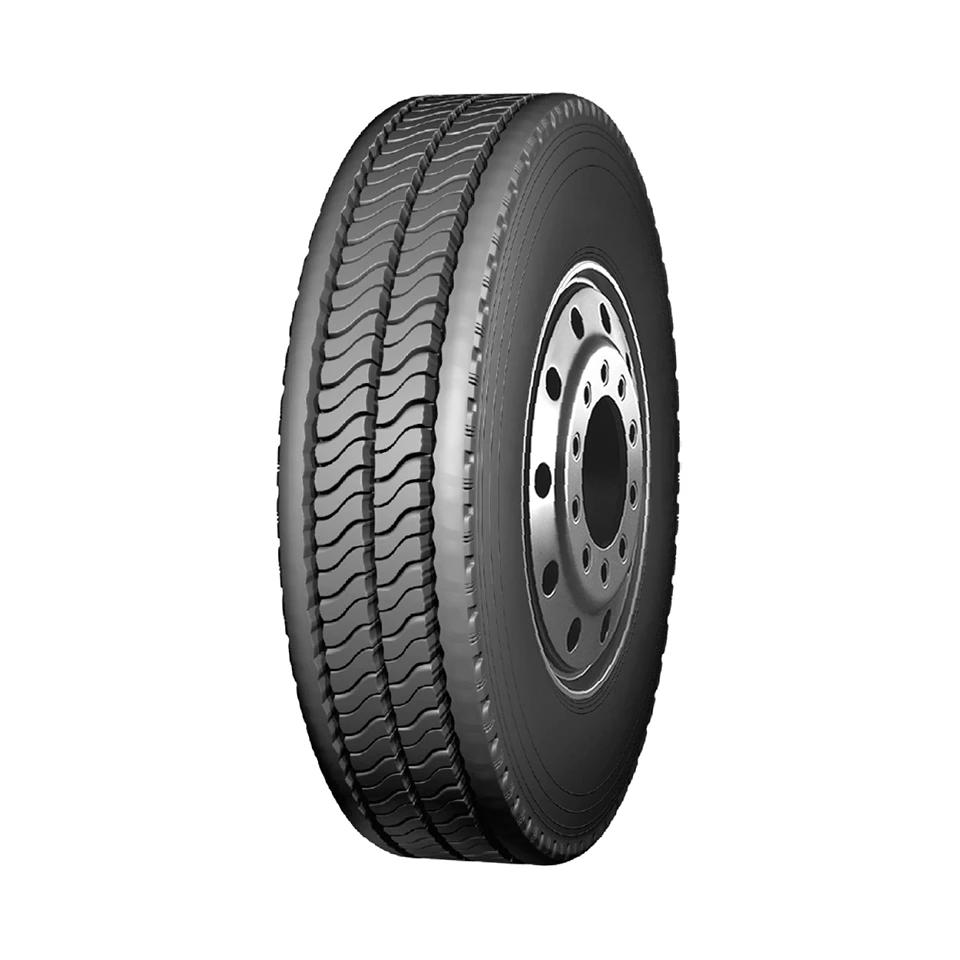
Load and pressure ratings is another make-or-break difference. Heavy-duty trucks need tires that can handle the weight of the trailer, cargo, and the truck itself without blowing out. The r627 is rated for a maximum load of 7,100 pounds per tire at 105 PSI, which is exactly what Class 8 trucks require for steer axles. It’s also built with a two-ply sidewall and steel belt reinforcement, so it can take a pothole or a curb bump without cracking. The r22? Since it’s not a specific model, load ratings range wildly. Some cheap r22 tires I’ve tested top out at 5,800 pounds at 80 PSI—way too low for a fully loaded steer axle. Run that on a cross-country haul, and you’re risking a blowout on I-80 in the middle of Wyoming, which is not only dangerous but costs thousands in downtime. I had a regular customer a couple years back who bought a set of r22s for his r627 replacement order (don’t ask me why he didn’t check the model code) and he blew two tires in a week, cost him $1,200 in tow fees and lost cargo. That’s the stuff that makes me wish more people actually knew what they’re buying.
Wear resistance and longevity tie into all that, too. The r627 is engineered with a special compound—mostly natural rubber mixed with synthetic polymers that resist heat buildup, which is the #1 cause of premature tire wear. On long hauls where you’re driving 10 hours a day, that heat adds up, and generic tires like r22s break down fast. Our r627 tires have a heat dissipation groove along the center rib that keeps temperatures 10-15 degrees lower than standard on-highway tires, which is why they last so much longer. I’ve got fleets that run our r627s for 320k miles before they need retreading, and that’s with them running at full load 5 days a week. The r22, though? Even if you get a “good” set, you’re looking at 150k to 200k miles max, and that’s if you’re lucky. Most owner-operators who go the r22 route end up replacing tires twice as often, which eats into their profit margins fast.
Wait, let’s circle back to that specific model link I mentioned earlier—our TBR Tyre 315/80R22.5 R627, that’s the bread and butter of our inventory. A lot of people mix up “r627” as a general tire category, but no, it’s a specific model line, with the 315/80R22.5 being the most common size for North American trucks. The r22? It’s not a model at all—it’s a rim size, plain and simple. So when you’re searching for tires, if you see a listing for “r22,” you have no idea what performance you’re getting. If you see “r627,” you know exactly what you’re getting: a purpose-built steer axle tire for heavy-duty on-highway use, consistent specs, reliable wear. That clarity is huge for fleet managers who need to budget for tire replacements year after year.
Another thing: maintenance. The r627 is balanced and designed for easy rotation, which helps even out wear across all steer axle tires. The sidewall has a visible tread wear indicator that lets you see when it’s time to get new tires, no guessing. The r22, since it’s generic, might not have that—you end up having to use a tread depth gauge every time you check your tires, which is a hassle. I’ve had customers tell me they forgot to check their r22s and ended up with uneven wear that caused steering problems, which is another safety hazard.
Look, I’m not here to bash r22 tires entirely—they have their place, like maybe for light-duty delivery vans that only run local routes, not cross-country semi trucks. But if you’re hauling freight long distances, running a Class 8, or trying to keep downtime and costs low, r22 is just not the right call. The r627 is a purpose-built, tested model that’s designed for exactly the demands of heavy-duty on-highway trucking.
At the end of the day, the biggest difference comes down to consistency. When you source from a reputable supplier for the real r627, you know you’re getting a tire that’s built to last, meet load specs, and keep you safe on the road. When you go with generic r22s, you’re rolling the dice on every haul. If you’re in the market for new steer tires, don’t settle for a random r22—check out our r627 line, specifically the TBR Tyre 315/80R22.5 R627, and see what makes it work for fleets and owner-operators alike. If you have questions about load ratings, tread life, or how to order a set that fits your truck, hit me up to chat through your needs.
References:
- North American Tire and Rim Association (2022). Standard Specifications for Commercial Vehicle Tires and Rims
- Truck Bus Radial (TBR) Tire Performance Guidelines, 2023 Edition
- Heavy-Duty Truck Tire Longevity and Cost Analysis, American Trucking Associations, 2024


