一,First: Collect Site Duty-Cycle Data
Before checking tire catalogs, lock down site parameters. Wrong TKPH matching is the No.1 cause of premature tire failure.
Dump truck model & OEM approved tire size / rim spec
Actual payload, axle load distribution (front / rear axle, loaded & empty)
Haul cycle: one-way distance, average speed, max speed, number of cycles per shift
Haul road condition: rocky / abrasive hard road / muddy soft ground, gradient, corner frequency
Ambient temperature, altitude, rainfall & slip risk
Historical failure mode: cut & chunking, heat separation, tread wear, sidewall impact, bead failure
✅ Core metric: TKPH (Ton-Kilometer Per Hour) - the single most important rating for mining haul trucks. Tire rated TKPH ≥ site calculated TKPH + safety margin (10–15%)
二,Tire Construction: Radial vs Bias-Ply
| Item | Radial OTR | Bias-Ply OTR |
|---|---|---|
| Heat dissipation | Excellent, steel belt design, suitable for long haul & continuous running | Poor heat resistance, easy heat separation on long cycles |
| Cut / impact resistance | Good, but sidewall is relatively thinner | Superior cut & impact resistance, thick carcass |
| Rolling resistance & fuel | Lower rolling resistance, better fuel economy | Higher fuel consumption |
| Retreadability | High-value casing, multiple retreads possible (big commercial advantage) | Limited retread potential |
| Typical application | Open pit, medium/long haul, stable haul roads, large rigid dump trucks | Short cycle, extremely rocky, heavy impact sites, small fleet auxiliary use |
Commercial rule: Almost all modern giant mining dump trucks adopt radial E4 as standard. Bias is only a niche alternative for severe cut-short-cycle sites
三,Tread Pattern & Rubber Compound
For haul dump trucks, the main E-series classification:
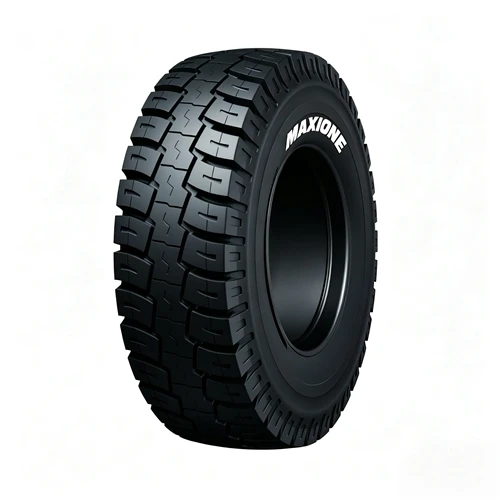
E3: Normal haul road, long distance, high average speed, heat limited; good wear, lower cut resistance
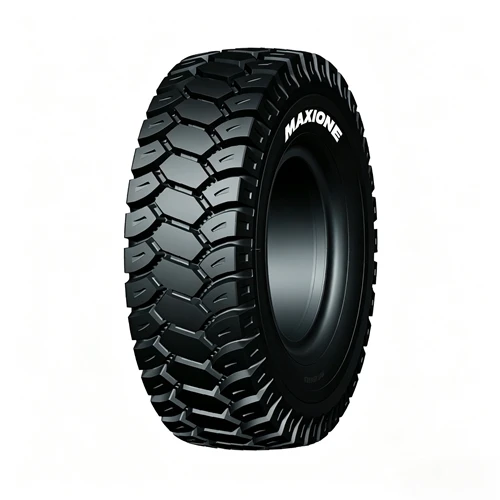
E4: Industry standard for mining dump trucks. Balanced cut resistance and heat dissipation; mixed rock & compacted haul roads, most open-pit mines default selection
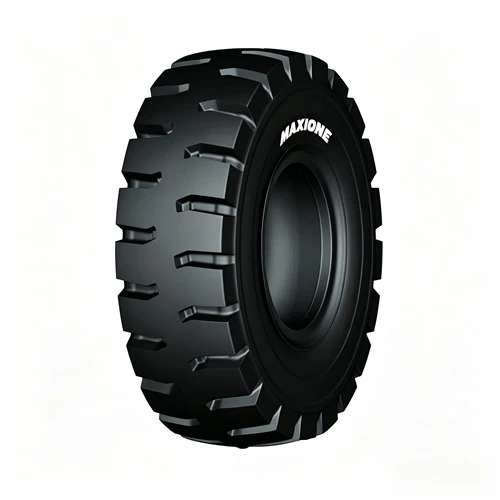
E5: Extra deep tread, maximum cut/chunk resistance; only for very short haul, sharp rock severe cutting conditions; penalty: poor heat tolerance, cannot run fast or long cycles
Rubber compound selection (trade-off):
Cut-resistant compound: Higher Shore A, anti-rock chipping; sacrifice wear performance
Heat-resistant compound: Optimized heat conduction; for hot climate, long haul
General balanced compound: Most commercial E4 standard grade, best for overall cost per ton
Key trade-off: Deeper tread = better cut resistance = worse heat tolerance. Never run E5 on long fast haul routes
四,Load Rating, Star Rating & Rim Matching
Must follow OEM approved size first, e.g. 40.00R57, 36.00R51; diameter deviation controlled within 3%
Star rating (★★ / ★★★): higher star = stronger carcass, higher load capacity at same inflation pressure; giant mining tires usually 3-star
Load-inflation table verification: confirm load capacity under working inflation pressure, not just catalog maximum rating
Rim compatibility: check bead seat, O-ring, valve type; giant tire mounting & demounting cost is high, rim mismatch causes bead failure and big downtime loss
五,Commercial Evaluation Dimension
Not only unit price; mining tire is a high-consumption asset, evaluate Total Cost of Ownership (TCO)
Unit price + freight, import duty, mounting, demounting, scrap disposal cost
Cost per ton / Cost per hour (CPH) - KPI for mining tire procurement
Casing warranty, retread service package: radial tire casing value is extremely important; supplier with local retread workshop has big advantage
Lead time & stock availability: giant OTR tires have long production cycle; mine shutdown loss far exceeds tire price
After-sales & site support: TKPH audit, TPMS solution, regular inspection team, failure analysis
Certification & compliance: ISO, DOT, ECE, CCC, mine safety approval as required by local regulation
Fleet option: new tire / retread tire / tire leasing program for capex control
六,Auxiliary Technology: TPMS & Monitoring
For giant mining tires, TPMS (Tire Pressure Monitoring System) is strongly recommended: real-time pressure & temperature alarm, avoid overheat, underinflation blowout, extend casing life. Many suppliers offer integrated TPMS as commercial package option
七,Typical Selection Decision Tree
Confirm truck OEM size & rim → baseline spec
Calculate site TKPH → eliminate any tire with rated TKPH below site demand
Haul road & failure history:
Long haul, good road, hot weather → E3 / heat-resistant E4 radial
General open pit, mixed rock road → standard balanced E4 radial (recommended default)
Short cycle, sharp rock, lots of chunking failure → E5 radial or evaluate bias
Budget & TCO strategy: new premium brand / mid-tier brand / retread program
Lock supplier SLA: warranty, site service, retread terms, emergency stock
八,Common Commercial Pitfalls
❌ Choose only by low unit price: cheap tires often have low TKPH rating, frequent blowout, huge downtime loss
❌ Over-spec E5 for long haul: heat separation, very short service life
❌ Ignore TKPH safety margin when overload is common on site
❌ Forget retread value: casing is the most valuable part of giant OTR tire
❌ Neglect inflation management: even correct spec tire fails quickly with wrong pressure