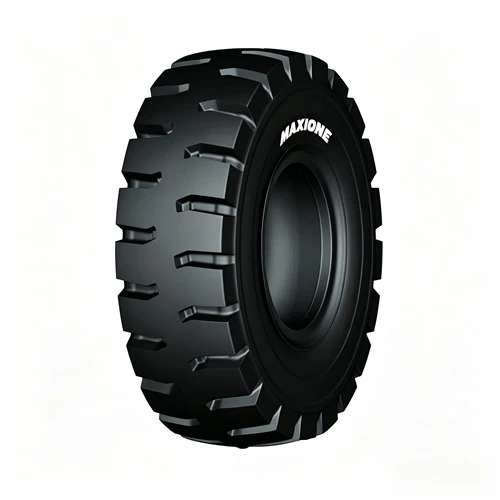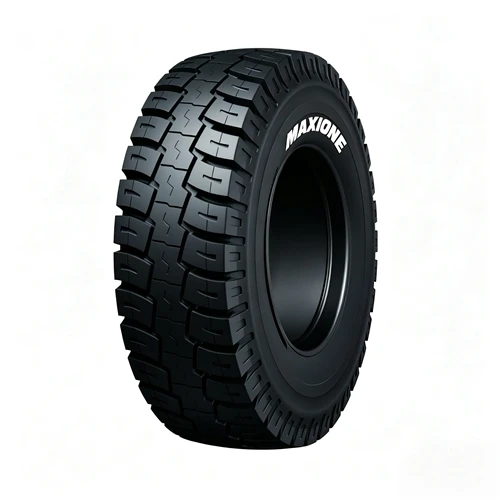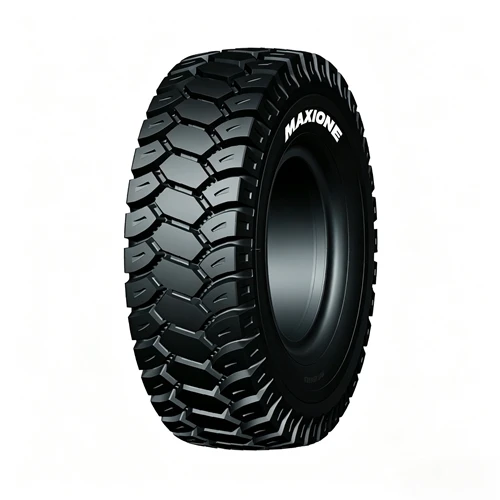
Context: Giant mining OTR tires (27.00R49 / 33.00R51 / 36.00R51 / 40.00R57) are high-capital, high-risk consumables. Visiting or auditing the factory is the most direct way to verify consistent quality, production capacity and technical capability, rather than only reviewing datasheets and quotations. MAXIONE Group operates a large-scale integrated tire manufacturing base focused on full-range OTR, giant mining radial tires, TBR and PCR tires.
1. Plant Overview & Capacity Foundation
MAXIONE's manufacturing complex covers over 5.6 million m², combining raw material warehouses, compounding workshops, giant tire building & vulcanization lines, QA laboratories, finished tire storage and logistics zones.
Positioning: One of China's manufacturers with the most complete giant OTR specification coverage and dedicated radial production lines for mining haul trucks
Product scope: E3 / E4 / E5 mining radial OTR, ranging from mid-size OTR up to ultra-large 40.00R57 rigid dump truck tires
Production model: Dedicated independent production cells for giant OTRs, not mixed with small tires, to avoid cross-contamination and schedule disruption
✅ Procurement trust point: Separate giant tire production lines mean stable cycle control, dedicated mould sets and prioritized capacity for mining orders. This directly reduces lead-time risk for mines with critical fleet replacement plans.
2. Raw Material Lab & Compounding Workshop (The Core of Tire Performance)
Tire service life starts at compounding; cut resistance, heat resistance and TKPH rating are determined here.
Raw material incoming inspection: Natural rubber, synthetic rubber, carbon black, silica, steel cord, bead wire, anti-ageing agents are sampled and tested before release.
Custom compound R&D lab: MAXIONE develops three core mining rubber packages:
Cut/chunk resistant compound for sharp-rock short-cycle mines (E5 tread)
Heat-stabilized compound for long-haul, high-TKPH open pits (E4 heat grade)
Balanced general-purpose E4 compound for mainstream mixed haul roads
Automated mixing line: Precision temperature, time and batch tracking. Every batch has traceability codes linked to final tire serial numbers.
✅ Procurement trust point: Ask for batch test reports and compound data matching your site failure mode. A supplier that cannot adjust rubber formulation for your mine is limited to "off-the-shelf standard tires".
3. Giant Tire Building Process - Carcass & Belt Assembly
Giant radial OTR building is the most technically difficult station; poor belt splicing and cord alignment are top hidden causes of belt separation and early blowout.
High-tension steel cord calendering: Steel belt layers for giant tires require strict tension uniformity. Uneven tension creates internal heat hotspots under load.
Automated building drums for large rim sizes (49/51/57 inch): Multi-stage layup of inner liner, carcass cords, belt package, shoulder wedge and tread.
Visual + laser inspection after building: Check splice gaps, cord drift, air trapping, shoulder thickness consistency before sending to vulcanization.
✅ Procurement trust point: During factory audit, focus on belt splice standards and laser inspection records. Many low-cost giant tire failures trace back to inconsistent belt splicing.
4. Vulcanization Workshop: Precision Mould & Curing Control
Vulcanization fixes the tire's final structure, hardness and bonding strength. Giant OTR presses and moulds are capital-intensive.
Large hydraulic curing presses matched for each giant size
Closed-loop curing control: real-time monitoring of temperature, pressure and curing duration. Over-curing makes rubber brittle; under-curing causes delamination.
Custom tread mould library: E3 smooth-wear, standard E4 mining, deep-tread E5 cut-resistant patterns; can support custom tread modification for special mine conditions upon volume agreement.
✅ Procurement trust point: Verify mould ownership and maintenance schedule. Worn moulds produce irregular tread geometry, uneven ground contact and accelerated shoulder wear.
5. Final QA, Serial Traceability & Performance Test Lab
Every finished giant tire goes through multi-stage non-destructive testing, not only simple visual check.
Visual inspection: Tread, shoulder, sidewall, bead, vent marks, surface defects
Uniformity & balance check for selected samples
X-ray inspection (critical for giant radial): detect hidden steel cord breakage, internal voids, delamination inside belt package
TKPH bench endurance testing in lab: validate published TKPH rating before product release
Unique serial number (SN) marking: full cradle-to-grave traceability, linking raw batch, build operator, curing record, QA result and after-sales failure analysis.
Certifications held: ISO quality management, DOT, ECE, plus regional certificates for global mining markets (GCC, SNI, SONCAP etc.)
✅ Procurement trust point: SN traceability is mandatory for mining tire warranty and failure claim. Without full traceability, it becomes difficult to distinguish manufacturing defects from operation damage.
6. Warehouse, Pre-Delivery Inspection & Global Logistics Zone
Giant OTR tires cannot be stacked arbitrarily; improper storage damages beads and sidewalls before they even arrive on site.
Vertical rack storage for giant radials, avoiding flat stacking crush
UV-protected covered warehouse
Pre-shipment PDI (pre-delivery inspection): recheck pressure, visual damage, label and document package before container loading
Dedicated packaging & loading procedure for ultra-large tires to prevent impact during sea and land transit
7. On-Site Technical & Aftermarket Support Centre (Factory Extension, Not Only Production)
For mining buyers, factory capability also includes post-delivery technical service:
Internal tire engineering team for TKPH calculation, site duty-cycle survey and failure dissection
Casing assessment & retread technical guideline support
Failure analysis lab: when tires fail on site, returned cut sections or photos can be reviewed by factory engineers to tell apart manufacturing defect, overload, road cut, inflation abuse or operation issue
Global field service network for mine audits, training and TPMS programme cooperation
✅ Procurement trust point: The best factory is not only good at making tires, but capable of helping you lower CPT (cost per tonne) through correct application guidance.
8. Key Audit Checklist for Your Procurement Team
You can use this list when arranging factory visit or remote audit:
Dedicated giant OTR production lines or shared lines?
X-ray & NDT testing coverage rate for giant tires
TKPH lab test capability and test reports for the E4/E5 grade you plan to buy
Full serial number traceability system
Rubber compound customisation support
Mould inventory and lead time for new sizes
Storage standard for giant tires
Warranty boundary: manufacturing defect vs operational damage judgement process
Lead time, monthly capacity of your target size
Short executive abstract
MAXIONE's giant OTR manufacturing facility integrates raw material compounding, radial tire building, precision vulcanization, X-ray non-destructive inspection and performance validation. Its core competitive advantage for mining customers lies in traceable production control, custom rubber compounding matched to mine duty cycles, complete E3/E4/E5 product portfolio and factory-backed TKPH & failure analysis service. Factory audit is a reliable way to validate quality consistency and reduce supply risk before awarding a mining tire contract.